Cryptozoology as 'the Scientification of Folklore'
Cryptozoology is best understood not as a science, or pseudoscience, but as a genre of folklore which emerged in response to science.
The purpose of the following blog post is to explain how I frame cryptozoology, and other Fortean topics, as subjects of academic inquiry and thereby share some of the insights I have gleaned about how best to approach this topic from a critical perspective.
The term “Fortean,” for those who may not be in-the-know, is derived from early 20th-Century American writer Charles Fort (1874 – 1932); the “inventor of the modern paranormal or conspiracy theory style” of popular literature (Card, 2018, 235).[1] Of particular interest to me is that branch of Forteana commonly known as “cryptozoology” and which consists of a voluminous body of popular lore concerning various hypothetical “hidden animals,” or “cryptids,” said to inhabit our planet (Coleman and Clark, 1999, 75-77).
Well known cryptids include hirsute anomalous primates like Bigfoot and the Yeti, lake monsters like those said to dwell in Scotland’s Loch Ness and North America’s Lake Champlain, sea serpents, living dinosaurs lurking in the interior of Africa, giant thunderbirds, and a whole host of teratologically fabulous chimeras known by a variety of colorful sobriquets including the Jersey Devil, Mothman, The Beast of Bray Road and El Chupacabra among others.
My personal interest in cryptozoology extends back to childhood and has in most ways been a lifelong preoccupation. However, I only began studying cryptozoology critically a decade ago (an elementary school poster presentation I did on the Loch Ness Monster notwithstanding).
What I have discovered concerning my own work on cryptozoology is that the subject is best understood not as a science, or pseudoscience, but rather as a genre of folklore which developed in response to the emergence of modern science and which has incorporated, or appropriated, the language of science in order to increase its veracity.
This is admittedly an etic (outsider) understanding of cryptozoology rather than an emic (insider) perspective, though I maintain that any scholar attempting to study cryptozoology critically is also a little bit of an insider. No one comes to this topic who didn’t at one time in their life seriously contemplate the reality of Bigfoot or Nessie, Mothman or the Chupacabra. And while I would never insist that this is the only way to conceptualize cryptozoology critically, I do believe it has several distinct advantages in relation to its explanatory power as I will endeavor to show.
Cryptozoology as Folklore: A Neglected Subject
Cryptozoology is not a topic usually discussed in academic spaces, and when it is broached is often caricatured as a pseudoscience (Regal, 2009, 49-51), even by some of its own practitioners with academic credentials (Bindernagel and Meldrum, 2012, 81-102). More specifically, Michael D. Gordin counts cryptozoology among what he calls “counter establishment sciences” which exist to oppose an overly materialistic scientific mainstream. This is an idea which, while not wrong, strikes me as rather one dimensional (2021, 41–3).
Conversely the notion that cryptozoology, in an academic context, might best be treated as a type of folklore may seem obvious, but is, in fact, somewhat radical.
American folklorist David J. Puglia, in a comprehensive literature survey of English language folklore scholarship dealing with cryptozoology, arrived at the dispiriting conclusion – reiterated multiple times throughout his essay – that “in-depth folkloristic examinations of American legendary monsters, or cryptids” is virtually nonexistent (Puglia, 2024, 2).
There are several reasons for this. For starters, despite some pervasive stereotypes to the contrary, the majority of academic folklorists do not spend their time investigating monsters, ghosts, and cursed objects (Tolbert, 2016, 125-43). Folklore, as an academic discipline, is a broad-church and it is far more common to find scholars of folklore whose interests concern topics such as traditional ballads, folkdances, historical dress, children’s games, folk-art, foodways, and even slang rather than subjects like “vampires, werewolves, cryptids, and Bigfoot” as Utah State University folklorist Lynne McNeill observes in a recent interview.
So uncommon are such preoccupations among folklorists that some – like British folklorist Simon Young, whose research does focus exclusively on fairies, ghosts, and cryptids – have even written about feeling out-of-step within their own field of study as a result.
Moreover, as historian of science Joshua Blu Buhs observers, even for those folklorists who are interested in monsters, cryptids simply are not seen as being a particularly compelling subject. Like Puglia, Buhs went looking for critical essays on Bigfoot by folklorists and discovered only a scant handful of examples and no book-length treatments on the topic.[2] His conclusion was that as a North American variation (or “oikotype” to use the technical term) of the familiar wild-man concept, the contemporary legend of Bigfoot holds little fascination for most folklorists who tend to perceived the phenomenon as rather unremarkable (2009, 3-6).
Another contributing factor is that folkloristics (the study of folklore) has always been a rather marginalized and trivialized field of study. It is not uncommon nowadays to see folkloristics referred to as a ‘dying discipline’ as a result of the number of universities who have shuttered their folklore studies programs since the late 1990s. As a result, those few academics still clinging to their status as professional folklorists are more likely to avoid a topic as presumably juvenile as monsters in their attempts to accrue professional clout and convince their academic colleagues of the seriousness of their field (Puglia, 2024, 6).
Puglia also observes that a final major contributing factor is the misplaced conviction among most academics that “scientific progress and technological advancement” has “kill[ed] off beliefs in monsters, ghosts, and the supernatural, ushering in an era of rationality and enlightenment” (2022, 14-15). This is what religious studies scholar Jason Ā. Josephson-Storm has dubbed “the myth of disenchantment” and it is a mindset deeply entrenched within the halls of the academy (2017).
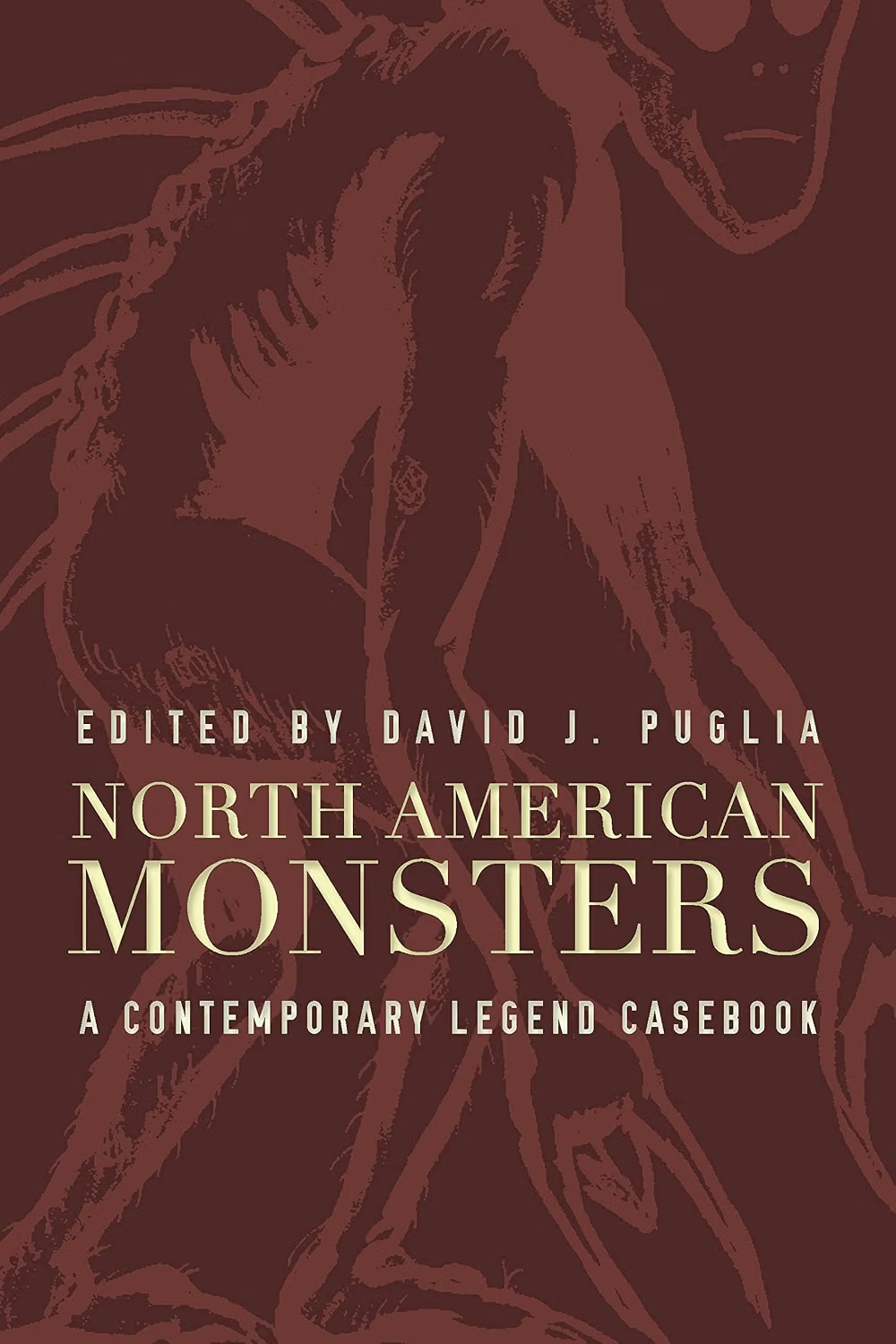
The reality of the situation, of course, is that “scientific and technological progress hasn’t sounded the death knell for monsters; it has reared and nurtured them” (Puglia, 2022, 14-15; Cf. Puglia, 2024, 5). Philosopher Stephen T. Asma concurs, writing that “the idea that we previously believed in monsters but now we don’t is a comforting illusion” with Asma pointing to his own student’s “obsession” with cryptozoology as just one example (2009, 279).
In the absence of formal academic discussions of cryptozoology, the most erudite and interesting treatments of cryptozoological topics have, for much of the 20th-Century, appeared not in scholarly journals or edited collections but popular newsstand magazines (of various lifespans) like the UK’s Fortean Times (1973 – Present), the US’s Skeptical Inquirer (1976 – Present), and Japan’s MU magazine (1979 – Present). Today many of these discussions are slowly shifting to online spaces like Medium or Substack, or personal websites like this one, or other formats entirely like podcasts and YouTube.[3]
Nevertheless, while folkloristics, as a whole, has not embraced cryptozoology as a subject worthy of substantive and sustained discussion, it is still the field that I maintain offers the most applicable models for understanding cryptozoology critically. There are also those folklorists, namely Puglia, who are actively working to encourage more work on cryptids and cryptozoological topics by folklorists. Until then this sort of scholarship is being carried out by a small “eclectic band of scholars, including folklorists, who seek to unravel the arcane community-based monster narratives” that comprises cryptozoology (Puglia, 2024, 15).
Seeking a Cryptozoological Methodology
So, folkloristics has the tools for understanding cryptozoology. But what exactly is cryptozoology?
Before one can examine a subject like cryptozoology one first needs a methodological understanding of what cryptozoology is. It is not enough to simply know that cryptozoology means “the study of hidden animals.” One must ask what exactly it means to practice cryptozoology? What is it exactly that cryptozoologists are doing?
As far as anyone has been able to determine the word “cryptozoology” made its first appearance in print in a 1941 New York Times book review by Ralph Thompson for The Lungfish and the Unicorn (1941, rev. 1948 as The Lungfish, the Dodo and the Unicorn) by German-American science-writer Willy Ley (1906 – 1969) (Loxton and Prothero, 2013, 16-17).[4] Ley’s writing on what he called “romantic zoology” captured the imagination of iconoclastic Scottish naturalist and men’s adventure magazine writer Ivan T. Sanderson (1911 – 1973) who, in turn, inspired the disaffected eccentric Belgian-French zoologist Bernard Heuvelmans (1916 – 2001), the soi-disant “Father of Cryptozoology.” True to his self-appointed moniker it was Heuvelmans, more so than anyone before or since, who spilt the most ink attempting to devise a comprehensive methodological understanding of cryptozoology. As a result, any serious attempt at arriving at such an understanding of the field must inevitably deal with Heuvelmans’ contentions sooner or later.
The one aspect of cryptozoology which Heuvelmans was absolutely unequivocal about was the significance which “the careful analysis of myth, legends, and folk-tales of all cultures and all races” played in the discipline’s “search [for] ‘monsters’” (1984 [a], 14). This is especially significant when one notices how utterly capricious Heuvelmans was about nearly every other aspect of cryptozoology. For Heuvelmans the centrality of “myths, legends, and folk-tales” to cryptozoology related directly to what he considered the primary task of cryptozoologists, namely the “demythifying” of such narratives in the hope that doing so would “help make the inventory of the planet’s fauna as complete as possible” (1982, 1 [Abstract]).
This “demythifying” aspect of cryptozoology was essential for Heuvelmans who took pains to stress that “cryptozoology is not an arcane or occult zoology, as some, in an attempt to discredit it, have suggested” (1982, 1). Cryptozoologists are not, and should not be thought of, as those in the business of hunting down supernatural entities (Schembri, 2011, 8). And while there always have been those who maintain that cryptids are supernatural in nature – an understandable position given what we are about to discuss – these same proponents also often take pains to distance themselves from cryptozoology as a field (Cutchin and Renner, 2020, ix-xiii).
Rather the quarry of cryptozoologists are to be understood as flesh-and-blood creatures who are only regarded as monsters “because of their extravagant and terrifying traits” which have caused them to be “unconsciously mythicized by our emotions… distorted and enhanced to fit into the pattern of sundry everlasting archetypes as reflecting our fantasies, fears, cravings, prejudices, or inner conflicts” (Heuvelmans, 1984 [a], 2. Cf. Heuvelmans, 1990, 1-12). By stripping away “those attributes which have been borrowed from their mythological models”, Heuvelmans maintained that cryptozoologists could reveal the previously unknown animals hidden beneath generations of monster lore (1988, 12).
Such an understanding of monster legends as systems which disguise a zoological reality marks Heuvelmans as an advocate of what mythographers (those who study myths) refer to as “euhemerism.” This term is derived from the Sicilian author and philosopher Euhemerus of Messene (c. 316 BCE) who posited that the Olympian deities were in reality ancient Mediterranean kings and queens whose existence had been occluded by generations of Greek mythology (Spyridakis, 1968, 337-40).
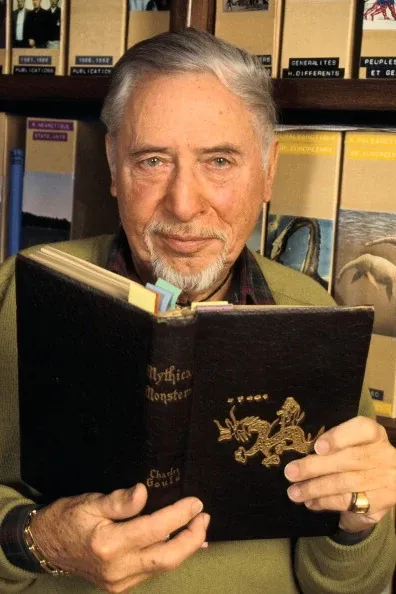
When it comes to the subject of monsters, it was the Victorian-era British geologist Charles Gould’s 1886 treatise Mythical Monsters that is often singled out as one of the most important books ever written on fabulous beasts, as it endeavored to re-contextualize them within the larger discourse of modern science (Nigg, 1999, 339). Like Heuvelmans, Gould held that such fabulous creatures as dragons, sea-serpents, unicorns, and the phoenix were all real animals whose identities had been obscured by exaggeration and superstition. For example, the opening pages of Mythical Monsters boldly declares that…
“…the dragon, in place of being a creature evolved out of the imagination […] is an animal which once lived and dragged its ponderous coils, and perhaps flew; which devastated herds, and on occasion swallowed their shepherds” (Gould, 1886, 2).
Heuvelmans was an admirer of Gould and one popular press photo shows him posed with an open copy of Mythical Monsters.
However, in spite of his importance in popularizing monster euhemerism, Gould did not invent this cryptozoological hermeneutic any more than Heuvelmans did. In my own work to date I have endeavored to highlight examples of this same style of euhemeristic interpretation of monster lore going back to 18th-Century America, Tokugawa era Japan (1600–1868), and among antiquarians and popular authors living on both sides of the Atlantic during the long 19th-Century (1789-1914) respectively. Moreover, I am aware of many other, even older, examples of this such as the “naturalizing [of] elemental demons… into profane sightings of undiscovered animals” by the 16th-Century Swiss physician Paracelsus (Meurger and Gagnon, 1988, 15; Cf. Hogan, 2023).
For this reason, historians attempting to trace the origins of cryptozoology who locate the practice’s beginnings in the mid-20th century, and the writings of Heuvelmans and his mentor Ivan T. Sanderson, are simply wrong (Poole, 2011, 134. Cf. Regal, 2011, 18–19) and would do well to familiarize themselves with Heuvelmans' own genealogical work on the field (1984 [a]), 1-30, Cf. 2007).
Euhemerized and Revivified Monsters
"Science", author Daniel Cohen (1936 – 2018) once wrote, is a "hard and restrictive" process which "destroys" rather than affirms our most "beloved romantic myths and is going to be resented" for it (1967, 5). This is true, and so cryptozoology endeavors to do the exact opposite (recall Gordin’s critique of cryptozoology as a “counter establishment science” designed to check mainstream science’s materialistic biases). Rather than dismissing the monsters of our mythologies and folklore as the “local superstitions held by uneducated countrymen and women” cryptozoology uses euhemerism to “renegotiate the boundary between natural and supernatural” by taking beliefs such as the existence of monsters and grounding them in putatively scientific fact thereby “increasing the meaning and importance of such beliefs” (Fergus, 2019, 89).
Cryptozoologists accomplish this by effectively reimagining the monsters of legend as creatures who conform, mostly, to the presuppositions of modern zoology and paleontology thereby transforming them into subjects worthy of scientific study. This process adorns such monsters with a veneer of scientific credibility. Or as naturalist and veteran Nessie investigator Adrian Shine parsed it in an interview with the podcast MonsterTalk: “We try to make our myths […] more rational as we go along because we don't want to relinquish them.”
This means that cryptozoology, as paleo-artist John Conway nicely puts it, is not really “the study of animals not yet described by science” but rather a field devoted to "entertaining the notion that legendary beasts are real animals" (Dobler, 2014, Web). Whereas residents living along deep, dark, cold freshwater lakes like Scotland’s Loch Ness or Japan’s Lake Ikeda in Kyushu once spoke of such bodies of water being inhabited by supernatural creatures like kelpies or other magical water-horses, today they talk about them as the dwelling place of cryptids like relic plesiosaurs, giant eels, or supersized seals.
This is also why, as I explained as part of an academic roundtable on cryptozoology held at the 2026 Gods and Monsters conference at Texas State University in San Marcos, you will inevitably get those individuals, like Ted Holiday (1921–1979) in the past or Joshua Cutchin and Timothy Renner in the present, who advocate for a supernatural understanding of cryptids. Because all cryptids were, at one time, supernatural to begin with, prior to being subjected to the euhemeristic hermeneutic of cryptozoology. The point to remember however is that once such creatures are returned to their default supernatural ontology they also cease to be cryptids anymore.
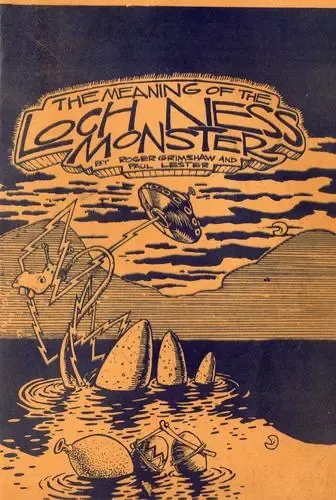
It was University of Birmingham cultural critics Roger Grimshaw and Paul Lester who, in their 1976 monograph The Meaning of the Loch Ness Monster, first termed this cryptozoological hermeneutic “the scientification of folklore.”[5] This process, in which folkloric monsters are adorned with a veneer of scientific credibility, is characterized by Grimshaw and Lester as “in effect the only way ‘monsters’ could survive at all” in a world dominated by the paradigm of scientific consensus (1976, 10). By naturalizing monsters, cryptozoologists had discovered a way to smuggle the fantastic beasts of our myths and folktales into a post-Linnaean system of zoological categorization and classification.
Cryptozoologists accomplish this by peppering folklore with scientific jargon and anecdotes, notably the retroactive reframing of stories about the surprising discovery of known animals – the gorilla, the giant squid, the coelacanth, the okapi, etc... – as examples of cryptids that turned out to be real. With such examples however an important distinction needs to be drawn between an animal being ethnoknown (known by a local community) and being folkloric, a distinction which cryptozoologists often abuse (Naish, 2017, 11–29). In reality such stories are just another layer of the cryptozoological folklore apparatus designed to serve as what narratologist Markus Davidsen has termed “veracity mechanisms;” elements of a story that lend it credibility and make an audience more inclined to believe it (2018, 41-2).
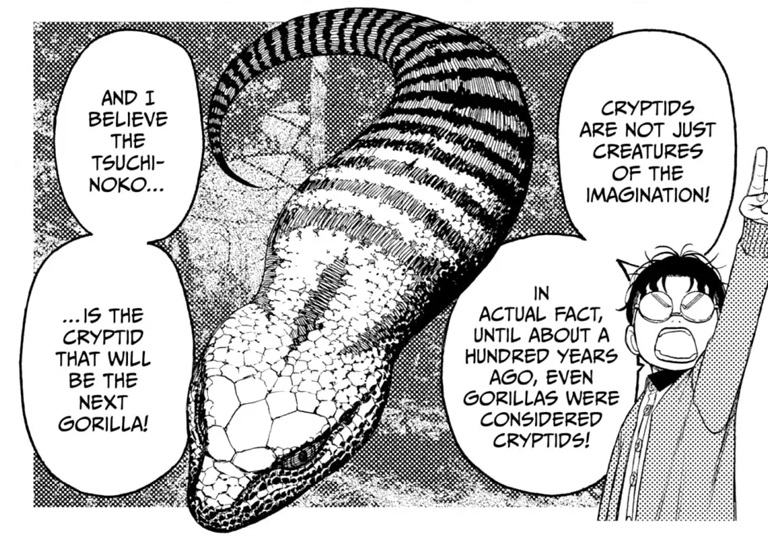
This is a process which has admittedly proven highly successful as media and literary scholar Jeffrey Andrew Weinstock observes since cryptids, “to a degree even greater than mythical creatures,” possess a phenomenal “staying power – once purchase is attained in the imagination, cryptids persist even when their origins can be traced to a hoax, mistake, or misperception” (2020, 21).
Which is another reason this euhemeristic hermeneutic is so important and constitutes a major aspect which many of cryptozoology’s detractors fail to grasp. As Puglia, thinking alongside art historian Asa Mittman, astutely notes: “It is not the reality of the monster that matters but the tingle of its potential presence, setting it apart from tales told merely for entertainment” (2024, 4). Or as author J.W. Ocker writes, in his survey of American cryptids, the appeal of cryptozoology resides in the promise of mythical creatures that may actually exist: “Sure, we have fictional monsters in our movies and books, but a thousand Frankensteins and King Kongs and Grendels weigh far less than a single monster that is ‘based on a true story’” (2022, 277).
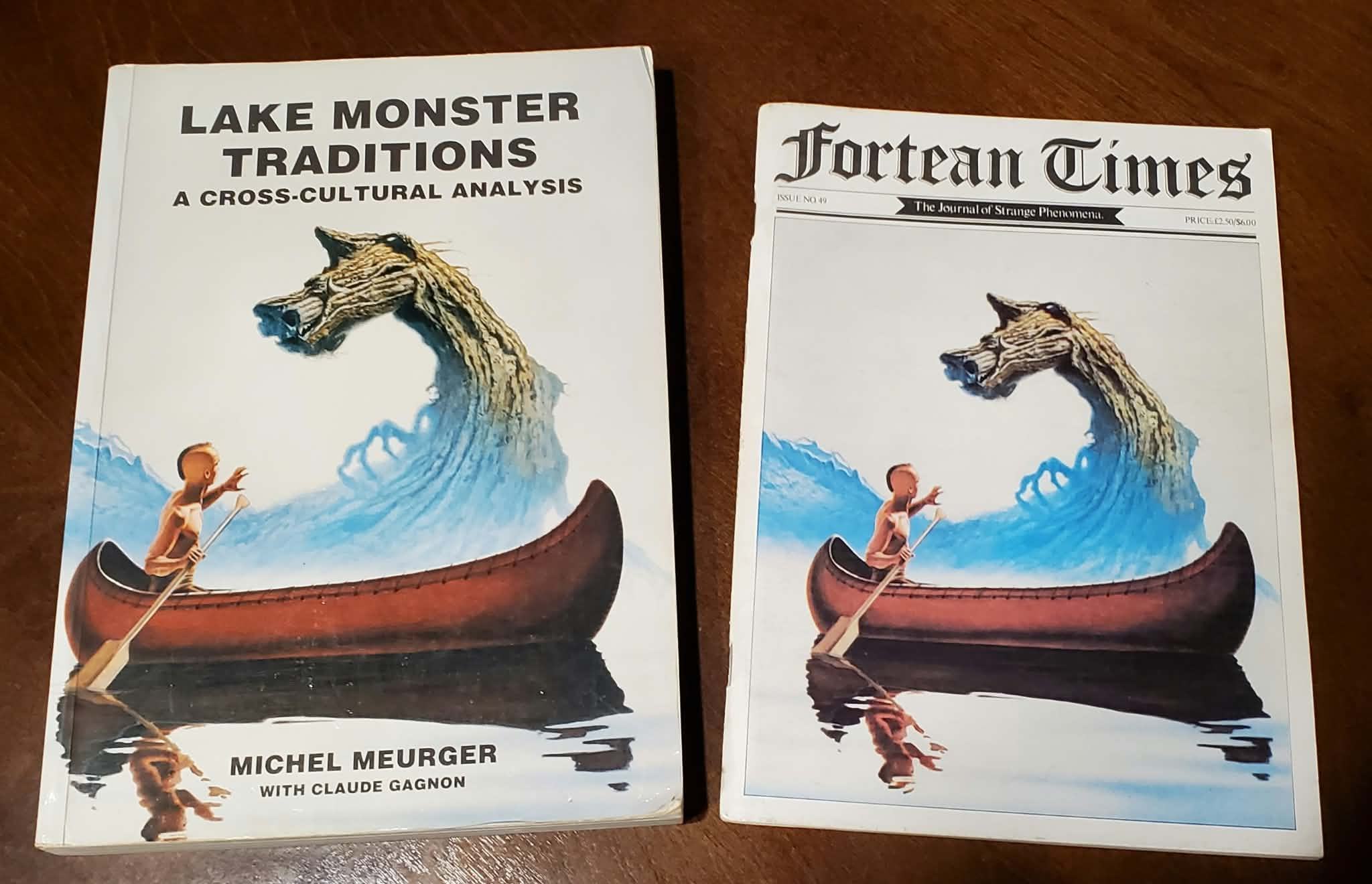
Grimshaw and Lester’s initial observations about cryptozoology as “the scientification of folklore” were greatly elaborated upon by French folklorist Michel Meurger, primarily through his 1988 book Lake Monster Traditions: A Cross-Cultural Analysis, co-authored with Claude Gagnon. Elsewhere Meurger has written that “cryptozoologists may be viewed as traditionalists, the heirs of an unquestioned framework built by scientists of the Enlightenment, and revealed to the masses by Victorian popularizers […] Bernard Heuvelmans […] may be seen as one of the last links in a long chain of euhemeristic interpret[ers] of […] folklore” (1999, 238).
Lake Monster Traditions was published by Fortean Times founder Bob Rickard, who became a fierce and passionate public champion of Meurger’s scholarship early on and remains so today (Rickard, Winter 1987, 61-7; Cf. Coleman, Aug. 8, 2011, Web). A 2015 editorial in Fortean Times titled “How to do Cryptozoology” cites Lake Monster Traditions – described as a book “whose insights still delight nearly three decades after publication” – as essential reading for any aspiring cryptozoology enthusiast (53).
In the early 90s, Rickard attempted to orchestrate a debate between Heuvelmans and Meurger in the pages of Fortean Times, only for Heuvelmans to quickly back down, protesting that Meurger was "quite incapable of understanding […] the language” of cryptozoology thus making it impossible for them to "debate, or even hold a simple dialogue!" (Summer 1990, 50). This suggests that Meurger’s ability to perceive exactly what kind of game the cryptozoologists were playing perturbed (and possibly disturbed!) Heuvelmans.
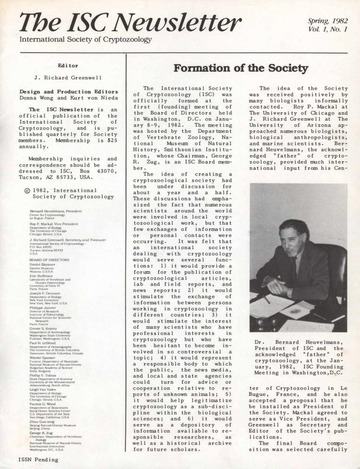
Afterall, it was exactly Heuvelmans and his acolyte’s unwavering euhemeristic commitment to the premise that all mythical and folkloric monsters were real animals that would result in one of the first major clashes to erupt within the International Society of Cryptozoology (1982 – 1998); a professional organization convened in January of 1982 with the aim of promoting “scientific inquiry, education, and communication among people interested in animals of unexpected form or size, or unexpected occurrence in time and space” (Coleman and Clark, 1999, 119). At the ISC’s inaugural meeting Heuvelmans was elected the organization’s first, and only, president, alongside an international and interdisciplinary Board of Directors which included “eleven other life scientists from seven countries” (Frazier, 1982, 11. Cf. Regal, 2011, 168).
Over the next two decades the ISC would accrue as many as 850 members who would convene for an annual meeting hosted by a credentialed university or scientific institute (Clark, 1999, 248-49). The ISC would also publish a quarterly newsletter and an annual journal, Cryptozoology, which science writer David Quammen described as “intriguing, diverse, and mainly quite sane” (1988, 93). Historian of science Brian Regal refers to this period as the “Golden Age of Cryptozoology” (2011, 171 & 180).
But all that glitters is not gold. University of Chicago paleobiologist, ISC board member, and veteran cryptid hunter Leigh Van Valen (1935 – 2010), alongside Canadian marine biologist John R. Sibert, objected to an article published in the debut issue of the ISC's journal by anthropologist Roy Wagner (1938 – 2018) concerning the ri; an Oceanian variation on the mermaid reportedly living off the coast of Papua New Guinea.
Together Van Valen and Sibert cautioned that if cryptozoology wished to be recognized as a legitimate scientific enterprise it should steer clear of such fantastical creatures as mermaids which, like jinn and leprechauns, were not appropriate research topics for a zoologist (1983, 155-57 & 159-61). Heuvelmans' reply to Van Valen and Sibert’s admonishment was quick and unequivocal…
“Mermaids, jinn, and the like are nothing else but the highly mythicized images of real animals (in the broadest sense). Mermaids are just distorted traditions of sirenians, pinnipeds, and sometimes dolphins, but possibly also of a still unknown form of aquatic primate (this, at least, cannot be ruled out completely). The name jinn was used by Mohammed the Prophet himself for wild hairy men living in the deserts, and which, he said, were not to be killed or even harmed, but, on the contrary, should be fed by the faithful. These scavenging outcasts were probably, in my opinion, relict Neanderthals. Finally, I know of several serious studies which try to link leprechauns, brownies, fairies, and tuttiquanti to the traditions of extinct prehistoric races (or species?) of pygmies.” (1984 [b], 110; Cf. Heuvelmans, 1995, 504).
What such remarks make clear is that for Heuvelmans, and the legions of cryptozoologists who have followed his lead either knowingly or unknowingly, cryptids are indistinguishable from all the monsters of our mythologies and folktales (da Silva Vieira, 2018, 53). From wild-men to sea-serpents, dragons and unicorns, mermaids, fairies, and jinn, even werewolves and vampires; all fall under cryptozoology’s euhemeristic hermeneutic in which such creatures cannot be wholly invented since, according to Heuvelmans, the human “imagination is strictly limited” and can only extrapolate based on what it sees in the world around it (1983, 5). Ergo there must be a grain of truth – an actual animal – behind all monster tales no matter how extravagant or fanciful they may seem. Because of this conceptualization Van Valen would later tell Heuvelmans that for the sake of clarity cryptozoology should really be define as “the study of […] animals of folklore” rather than the putative “science of hidden animals” (1983, 156). Naturally Heuvelmans dismissed this suggestion.
But we don’t have to.
“What Did You See?” Folkloristics and Eyewitnesses
One of the most common objections to the proposal to treat cryptozoology as a type of folklore is the claim that cryptids exist not simply as narratives but as lived experiences. As religious studies scholar Jeffery Kripal observes the most pressing issue for the critical researcher interested in cryptozoology is how to make sense out of the numerous “modern people [who] have experienced monsters not as ‘discourses’ or as cultural ‘deconstructions,’ but as actual incarnate, discarnate, or quasi-incarnate beings.” In making this point Kripal is quick to clarify that he does not “mean to point to some future biological taxon. I do not think that we will someday shoot a Sasquatch or net the Loch Ness Monster. By real I mean quite simply ‘really experienced,’ I mean ‘phenomenologically actual’” (2017, 899).
In other words, when people tell stories about cryptids, they are most often relating them as encounters with an ‘unknown animal’ which either they or others report to have had. However, the critical study of folklore actually accounts for this phenomenon quite well.
To begin with we need to do away with one of the Skeptic’s most cherished interpretations for cryptid encounters: misidentification, or the classic ‘You didn’t see a Bigfoot, you saw a bear’ argument (Nickell, 2015, Web; Foxon, 2024, 1-8).
Here we find one of Meurger’s most crucial observations, namely that Skeptics are just as susceptible to the lure of euhemerism’s easy answers as cryptozoologists. This extends not only to arguments that Bigfoot sightings are simply misidentified bears but also claims that lake monsters are just stray pieces of driftwood. Meurger writes…
“Whether searching for hidden creatures or for pieces of wood, cryptozoologists and skeptics consciously refuse to accept myth as a product of the human mind, as an imaginary story. They accept Man as a witness of Nature, but not as a creator of a mythified naturalism. For them myths and legends are always the echo of an objective experience; they are like archeologists excavating the soft soil of fables looking for a hard reality” (1988, 11-12).
Or as Adrian Shine, summarizing Meurger, writes: “the human imagination needs no physical evidence upon which to found mythical narratives” (2025, 4).
In sociology when two competing parties on an issue come to the same conclusion it is called “doxa” and is understood to indicate that despite their apparent opposition both parties are working from the same set of assumptions (Bourdieu, 1977, 164). In this case, Meurger’s point is that both cryptozoological advocates and Skeptics are working from the shared assumption that the alleged witnesses of, in this case a lake monster, had to have actually seen something. Something which an investigator can then identify.
This is a common pitfall for both cryptozoologists and Skeptics who similarly err in their assumption that “myths and legends are always the echo of an objective experience” especially when presented with an air of verisimilitude (Meurger and Gagnon, 1988, 12). For Skeptics such verisimilitude is taken as an indication that corroborative physical evidence should exist, while for the cryptozoologist a plausible sounding narrative coming from a presumably trustworthy source is sufficient to establish an event’s reality. In the context of folklore, however, neither is the case.
Nevertheless, this particular claim of Meurger’s has consistently proven one of the most difficult passages for those engaged with cryptozoology, critically or otherwise, to accept.
Jerome Clark, who was editor from 1976 – 1993 of the long running American Fortean magazine FATE (1948 – Present), reduced Meurger’s argument here to the simplistic assertion that those claiming to have witnessed such creatures must "[harbor] prodigiously gifted imaginations" (Clark, 1999, 442). Even more striking Puglia provides a similarly reductive assessment of Meurger’s scholarship as dismissing tales of cryptids “as mirrors reflecting misunderstood experiences”, when nothing could be further from the truth (2024, 4).
One of the key problems here, observes paleobiologist Darren Naish in his 2017 book Hunting Monsters, is that Meurger’s arguments on this front are often perceived as “vague and airy, and little connected to the phenomena whereby people claim to see real flesh and blood animals”, thus leaving those concerned with the question of “how might this process actually work?” (213).[6]
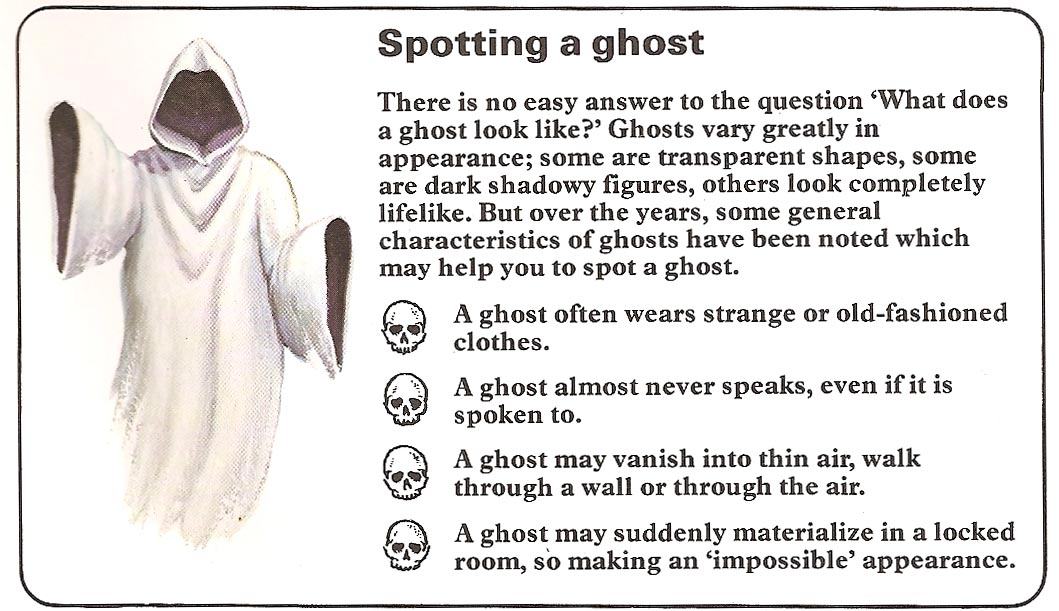
The first step to understanding putative eyewitness sightings of cryptids, the bedrock of cryptozoology, is to recognize that they constitute a paradox since one cannot be an eyewitness to something whose objective existence is unverified. This point was memorably raised by Hungarian folklorists Linda Dégh (1918 – 2014) and Andrew Vázsonyi (1906 – 1986) in a landmark 1983 essay in which they consider accounts of people who “admitted to having witnessed a supernatural encounter”, in this case, with a ghost (18).
In the course of their essay Dégh and Vázsonyi consider multiple possible explanations for such an encounter including hoaxes (another favorite go-to explanation for Skeptics) as well as the possibility that the encounter was entirely genuine (i.e., the witness really encountered a ghost). But on this last point, Dégh and Vázsonyi object on the grounds that “the observer would not have recognized the ghost if not already familiar with the necessary ingredients from legends” (Ibid, 19).
Which is to say, if the only frame of reference one has for a ghost is what one has heard described in folklore (or today more commonly seen depicted in popular culture) then to admit that you have seen a ‘real’ ghost is to claim that you have had an encounter with an entity which exists only in folklore. How is this possible? Simply put it isn’t and thus represents a paradox. The only other alternative explanation being that ‘real’ ghosts coincidentally happen to perfectly conform to the models described in folklore. And while it is always possible that stories of ghosts are based on prior real encounters, it is impossible to tell which came first, thus transforming the issue into an epistemological dilemma of infinite regression (e.g., which came first, the chicken or the egg?).
And while Dégh and Vázsonyi’s essay dealt with a ghost, the same logic can be equally applied to various cryptids, as demonstrated by Welsh sociologists Jamie Lewis and Andrew Bartlett via their ethnographical work on cryptozoologists researching Bigfoot. As Lewis and Bartlett observe, in order for a putative Bigfoot witness “to make an encounter with the unknown – with strange events, with unexplained sounds, with a sighting of something – into an encounter with Bigfoot requires knowledge of Bigfoot” (2026, 93). However, with no uncontested biological Bigfoot specimens known, the only remaining avenue for such knowledge must be cultural.
If such an explanation sounds overly Skeptical, it is important to remember that Dégh and Vázsonyi also reject the standard Skeptical interpertation of hoaxing on the same grounds. Not because such events do not occur but because prior knowledge of folklore is still required to pull off a successful hoax (i.e., a successful prankster in a Bigfoot suit needs a working knowledge of the common consensus concerning Bigfoot’s appearance, in addition to the assurance that his intended mark(s) will be in agreement with that consensus).
Rather the only viable explanation, according to Dégh and Vázsonyi, is that the putative witness to a ghost, or Bigfoot, has instead “presented an invented story as a memorate based on personal experience” thus lending the story additional “credibility” (1983, 18 & 21). Dégh and Vázsonyi dubbed this process "ostension"; a concept that those interested in cryptozoology would do well to familiarize themselves with (Ibid., 5-6).
The term memorate was coined in 1934 by the Swedish folklorist C.W. von Sydow (1878 – 1952) and is defined as “a certain category of narrative told by people about a personal experience. [It] contains no elements of deliberate fiction […] but can be influenced by folk legends about similar events” (Kuusela, 2020, 176 n.5). This concept was subsequently more fully developed by Finish folklorist and historian of religion Lauri Honko (1932 – 2002) who argued that the careful study of such narratives could “reveal those situations in which supernatural tradition was actualized and began directly to influence behavior” (1964, 16).
Honko also cautioned that memorates should not be taken at face value since they constitute part of a “narrative tradition” and are thus susceptible to dramatic changes especially if they are “told many times” and “particularly if that tradition includes suitable parallels and patterns” found in existing folklore (Ibid., 11). As a result, a memorate will not tell an investigator, “what kind of supernatural experience actually [occurred], but rather what should have been, according to the bearers of the tradition” (Ibid., 11-12).
With regards to monster sightings Honko remarked that “a person often does not yet know what the creature he sees is” at the time of the encounter and only retroactively comes to this realization after the lens of local folklore and tradition has been applied (Ibid., 16). In coming to identify the creature which they have encountered, Honko writes that this is sometimes accomplished by the eyewitness themself but more often is the result of dialogue with one’s community and then a consultation with a “specialist” who knows the local folklore (Ibid., 17-18). For our purposes these “specialists” would be the cryptozoologists themselves.
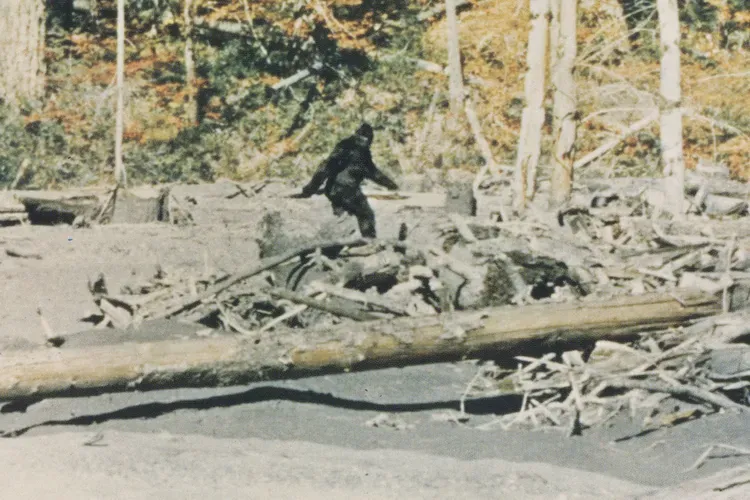
Honko’s comments here about eyewitnesses and the monsters they are supposed to have seen corresponds perfectly with the theoretical arguments of Dégh and Vázsonyi as well as the ethnological findings of Lewis and Bartlett who observe “a general pattern to these stories, in which the encounter produces an absence, a central unknown, which the witness fills” either after conducting their own research or through consultation with a “specialist.” Moreover, Lewis and Bartlett find that “these stories do not exist in correspondence only with the events and experience of the teller, but also with stories already told” by other putative eyewitnesses as well (2026, 77-8).
As another example Skeptical cryptozoological investigators Ben Radford and Joe Nickell (1944 – 2025), citing Meurger, outline a near perfect test case for illustrating Honko’s argument about how monster sightings evolve from inexplicable but otherwise innocuous occurrences to full-blown encounters with some weird creature in the first appendix of their book Lake Monster Mysteries using the case of Sandra Mansi; a celebrated witness to the Lake Champlain monster (2006, 153-60).
Thus, it is fundamentally a category error to speak of people who claim to have seen cryptids as eyewitnesses at all. Such individuals are not eyewitnesses but what folklorists call "traditors" (i.e., one who relates a traditional tale) who are recounting monster lore in the form of what anthropologist Charles A. Ziegler (1927 – 2019) termed a “personalized legend” (1997, 36).
However, it is important to note that nothing about this explanation invalidates the experiences of the traditors. Under such a hermeneutic their experiences remain, as Kripal phrased it, “phenomenologically actual.” Stories of encounters with Bigfoot or other cryptids remain those individuals, and their communities, interpretation of real experiences. Just as stories of misidentifications and hoaxes remain the Skeptical community’s interpretation of the same experiences (Hufford, 1982, 47 – 55, Cf. Paxton, 2025, Web – see esp. Claim #4).
Reception
Since the publication of Grimshaw and Lester’s monograph in 1976, followed by Meurger’s elaborating of their concept of cryptozoology as the scientification of folklore in his Lake Monster Traditions, the interpretation of cryptozoology as folklore has come in fits and starts, misfires and tactical advancements.
With regards to Grimshaw and Lester’s original monograph, until recently the only other researcher interested in this subject who I knew who had actually read it is David Roddy, creator and host of the brilliant podcast The Worker’s Cauldron (2020 – 2024, currently on hiatus) which examines “the cultural politics of the paranormal” through a Marxist lens. David’s Oct. 2020 episode “Class Struggle and the Loch Ness Monster” makes extensive and excellent use of Grimshaw and Lester’s The Meaning of the Loch Ness Monster.
Otherwise, awareness of the concept of cryptozoology as the scientification of folklore has come almost exclusively from Meurger’s Lake Monster Traditions.
In 2013 Skeptical author and illustrator Daniel Loxton proposed the concept of a future "post-cryptid cryptozoology" in his and co-author Donald Prothero's cryptozoological debunking tour deforce Abominable Science! Here Loxton described his “post-cryptid cryptozoology” as “a folkloristic cryptozoology that investigates animal-themed mysteries without any particular expectation of discovering new species” (308). Personally, this concept never made much sense to me, as cryptozoology without cryptids isn’t cryptozoology, and what Loxton is otherwise describing is the already established discipline of folkloristics. Perhaps not surprisingly two-years later Loxton acknowledged in a blog post describing Lake Monster Traditions as “one of the most important cryptozoology books ever written” that in formulating his “post-cryptid cryptozoology” he was simply riffing off of Meurger’s “scientification of folklore.”
That same year geologist Sharon Hill, who has demonstrated a persistent interest in cryptids, wrote a five-part series of posts for her own website titled "Cryptozoology and Myth" reflecting on Lake Monster Traditions. Her commentary contains many worthwhile insights.
Recently Sharon appeared on the Skeptical podcast Squaring the Strange (co-hosted by Ben Radford) alongside Darren Naish to discuss cryptozoology. During this conversation, Naish described the process which “folklorist Michel Merger called scientification” as being “the most interesting part of cryptozoology because we're basically seeing folklore conducted through a zoological lens.”
An excellent recent use of the scientification of folklore concept for cryptozoological analysis is MonsterTalk creator and co-host Blake Smith’s current essay on “circus train wrecks” as a persistent and surprisingly popular explanation for cryptid encounters.
And then there is my own work on cryptozoology. As a scholar I have deliberately positioned myself in line with Grimshaw, Lester, and Meurger as well as historian Joshua Blu Buhs - author of the excellent book Bigfoot: The Life and Times of a Legend (2009) - in my approach to cryptozoology in all my published works as well as my unpublished, but publicly accessible, doctorial dissertation.
While cryptozoology is often framed as a science by supporters and a pseudoscience by detractors, the reality is that it is neither. Instead my work treats cryptozoology as a modern evolution of monster folklore, which adapted in response to the emergence of modern science. Cryptozoology takes time-honored legends and transforms them into mysteries that can be solved with a camera and net, allowing us to suspend our disbelief just a little bit longer.
Or as Meurger, with his typical exactness, has phrased it...
“Cryptozoologists triumph when they can substitute Neanderthals, giant apes and long necked seals for devils, trolls and dragons. But it is a short-lived victory. They are still asking us to believe, just as the storytellers of old did” (1990, 48-9).
There are multiple metrics by which a scholar may measure the success of their work. But, speaking personally for a moment, one of mine came in July of 2026 when I received a surprise email from Michel Meurger. He was writing to let me to know he had read one of my essays, and my PhD thesis, and wanted to say he thought my contributions to the critical discussion on cryptozoology were "seminal."
Portions of this essay originally constituted chapters of my doctorial dissertation. Some made it through, others - notably the section dealing with cryptid eyewitnesses - were cut at the behest of my dissertation committee as being irrelevant to my project. Other portions will hopefully soon appear in a chapter on cryptozoology for the forthcoming textbook Fringe Science: The Intersection of Belief and Skepticism (Routledge). A heavily abridged version of this essay has appeared on Reddit here.
Special Thanks to Nick Clark and Lana Pratt for research assistance, and to Loren Coleman for answering questions.
Citations:
- Asma, Stephen T. On Monsters: An Unnatural History of Our Worse Fears. Oxford UP, 2009.
- Bartlett, Andrew and Jamie Lewis. "The Shape of Bigfoot: Transmuting Absences into Credible Knowledge Claims," Cultural Sociology Vol. 20 no. 1 (2026), 75–95.
- Bindernagel, John and Jeff Meldrum. "Misunderstandings Arising from Treating the Sasquatch as a Subject of Cryptozoology," The Relict Hominoid Inquiry no. 2 (2012), 81-102.
- Bourdieu, Pierre. Outline of a Theory of Practice. Cambridge UP, 1977.
- Card, Jeb J. Spooky Archeology: Myth and the Science of the Past. U. of New Mexico P., 2019.
- Clark, Jerome. Unexplained! New Edition. Canton, MI: Visible Ink Press, 1999.
- Cohen, Daniel. Myths of the Space Age. New York: Tower Books, 1967.
- Coleman, Loren. "Fortean Tomes Publisher Responds: Lake Monster Traditions Misunderstood," Cryptomundo (Aug. 8, 2011), Web.
- Coleman, Loren and Jerome Clark. Cryptozoology A to Z: The Encyclopedia of Loch Monsters, Sasquatch, Chupacabras, and Other Authentic Mysteries of Nature. New York: Simon & Schuster, 1999.
- Cutchin, Joshua and Timothy Renner. Where the Footprints End: High Strangeness and the Bigfoot Phenomenon, Vol. I: Folklore. Independently published, 2020.
- Davidsen, Markus Altena. Narrative and Belief. New York: Routledge, 2018.
- Dégh, Linda and Andrew Vázsonyi. "Does the Word 'Dog' Bite? Ostensive Action: A Means of Legend-Telling," Journal of Folklore Research Vol. 20 no. 1 (May 1983), 5-34.
- Dobler, Russ. “Holding Out Hope for Bigfoot,” The Pulp Press (April 2014), Web.
- Fergus, Emily. "‘Goblinlike, Fantastic’: Little People and Deep Time at the Fin De Siècle." University of London, 2019. MA Thesis.
- Frazier, Kendrick. “Group in Quest of ‘Unexpected’ Animals’,” Skeptical Inquirer (Summer 1982), 11.
- Foxon, Floe. “Bigfoot: If It’s There, Could It Be a Bear?,” Journal of Zoology Vol. 323 no. 3/41 (May 2024), 1–8.
- Gould, Charles. Mythical Monsters. Portland, OR: Crescent Books, 1989 [1886].
- Grimshaw, Roger and Paul Lester, The Meaning of the Loch Ness Monster. Birmingham: U. of Birmingham, 1976.
- Heuvelmans, Bernard. On the Track of Unknown Animals 3rd Ed. New York: Kegan Paul International, 1995.
- “What is Cryptozoology?,” Cryptozoology Vol. 1 (Winter 1982), 1-12.
- “How Many Animal Species Remain to be Discovered?,” Cryptozoology Vol. 2 (Winter 1983), 1-24.
- “The Birth and Early History of Cryptozoology,” Cryptozoology Vol. 3 (1984 [a]), 1-30.
- “Cryptozoology: What It Really Is,” Cryptozoology Vol. 3 (1984 [b]), 109-11.
- “Annotated Checklist of Apparently Unknown Animals with which Cryptozoology is Concerned,” Cryptozoology Vol. 5 (1986), 1-26.
- “The Sources and Method of Cryptozoological Research,” Cryptozoology Vol. 7 (1988), 1-21.
- “The Metamorphosis of Unknown Animals into Fabulous Beasts and of Fabulous Beasts into Known Animals,” Cryptozoology Vol. 9 (1990), 1-12.
- "Myth and Science actually complete each other," Fortean Times no. 54 (Summer 1990), 50.
- The Natural History of Hidden Animals. New York: Routledge, 2007.
- Hogan, Samuel Gillis. Communing With Nature: Fairies in English Ritual Magic and Occult Philosophy, 1400-1700. University of Exeter, 2023. PhD Thesis.
- Honko, Lauri. "Memorates and the Study of Folk Beliefs," Journal of the Folklore Institute Vol. 1 no. 1/2 (1964), 5-19.
- Hufford, David J. "Traditions of Disbelief," New York Folklore Vol. 8 no. 3 (Winter 1982), 47-55.
- Josephson-Storm, Jason Ā. The Myth of Disenchantment: Magic, Modernity, and the Birth of the Human Sciences. Chicago UP, 2017.
- Kripal, Jeffery J. Authors of the Impossible: The Paranormal and the Sacred. U. of Chicago P., 2010.
- "Better Horrors: From Terror to Communion in Whitley Strieber’s Communion (1987)," Social Research: An International Quarterly Vol. 81 no. 4 (Winter 2014), 897-920.
- Kuusela, Tommy. "Spirited Away by the Female Forest Spirit in Swedish Folk Belief," Folklore Vol. 131 no. 2 (2020), 159-79.
- Loxton, Daniel and Donald R. Prothero, Abominable Science! Origins of the Yeti, Nessie, and Other Famous Cryptids. New York: Columbia UP, 2013.
- Meurger, Michel. “Three-headed Trolls have gone right out of Fashion,” Fortean Times no. 54 (Summer 1990), 48-9.
- “Francesco Negri, the Kraken and the Sea Serpent,” Fortean Studies Vol. 6 (1999), 238-44.
- Meurger, Michel and Claude Gagnon. Lake Monster Traditions: A Cross-Cultural Analysis. London: Fortean Tomes, 1988.
- Naish, Darren. Hunting Monsters: Cryptozoology and the Reality Behind the Myths. London: Sirius Publishing, 2017.
- Nigg, Joseph. The Book of Fabulous Beasts. Oxford: Oxford UP, 1999.
- Nickell, Joe. "Hidden in Plain Sight: Discovering the Bigfoot Bear," Skeptical Inquirer Vol. 46 no. 1 (Jan/Feb. 2022), Web.
- Ocker, J.W. The United States of Cryptids: A Tour of American Myths and Monsters. Philadelphia, PA: Quirk Books, 2022.
- Paxton, Charles G.M. "Weird Things Some Scientific Skeptics Say about Science," Skeptical Inquirer Vol. 49 no. 6 (Nov/Dec. 2025), Web.
- Poole, Scott W. Monsters in America: Our Historical Obsession with the Hideous and the Haunting. Baylor UP, 2011.
- Puglia, David J. "Introduction: North American Monsters," North American Monsters: A Contemporary Legend Casebook. Utah State UP, 2022.
- "The (Mostly) Unseen World of Cryptids: Legendary Monsters in North America." Humanities Vol. 13 no. 1 (2024), 1-15.
- Quammen, David. The Flight of the Iguana: A Sidelong View of Science and Nature. New York: Scribner, 1988.
- Radford, Benjamin and Joe Nickell. Lake Monster Mysteries: Investigating the World's Most Elusive Creatures. UP of Kentucky, 2006.
- Regal, Brian. Pseudoscience: A Critical Encyclopedia. Westport, CT: Greenwood Press, 2009.
- Searching for Sasquatch: Crackpots, Eggheads, and Cryptozoology. New York: Palgrave Macmillan, 2011.
- Rickard, Bob. "What 'Lake Monster Traditions' Means to Me," Fortean Times no. 49 (Winter 1987), 61-7.
- "How to do Cryptozoology," Fortean Times no. 332 (Oct. 2015), 52-3.
- Schembri, Elise. "Cryptozoology as a pseudoscience: beasts in transition," Studies by Undergraduate Researchers at Guelph Vol. 5 no. 1 (Fall 2011), 5-10.
- Shine, Adrian. A Natural History of Sea Serpents. Caithness, UK: Whittles Publishing, 2024.
- Sibert, John R. “Ri-ality: A Mermaid in the Hand?,” Cryptozoology Vol. 2 (Winter 1983), 159-61.
- Spyridakis, Stylianos. “Zeus Is Dead: Euhemerus and Crete,” The Classical Journal Vol. 63, no. 8 (May, 1968), 337-40.
- Tolbert, Jeffrey A. "Deadly Discipline: Folklore, Folklorists, and the Occult in Fatal Frame," The Folkloresque: Reframing Folklore in a Popular Culture World. UP of Colorado & Utah State UP (2016), 125-43.
- Van Valen, Leigh. “Cryptozoology, Paleontology, and Evidence,” Cryptozoology Vol. 2 (Winter 1983), 155-57.
- Vieira, Kleber da Silva, et al., “Imaginary Zoology,” Ethnozoology: Animals in Our Lives. London: Academic Press, 2018.
- Weinstock, Jeffrey Andrew. “Introduction: A Genealogy of Monster Theory,” The Monster Theory Reader. Minneapolis, MN: U. of Minnesota P., 2020.
- Ziegler, Charles A. "Analysis of the Roswell Myth: A Traditional Folk Motif Clothed in Modern Garb," UFO Crash at Roswell: The Genesis of a Modern Myth. Old Saybrook, CT: Konecky & Konecky, 1997.
Notes
-
Or as religious studies scholar Jeffery J. Kripal has remarked: “If the history of Western philosophy is a series of footnotes to Plato, the history of the paranormal in the twentieth century is a series of footnotes to Charles Fort” (Kripal, 2010, 125).
↩ Back to note 1 in the text -
A fact which has not changed in the intervening 17-years. There is still no book-length work on Bigfoot by a qualified folklorist.
↩ Back to note 2 in the text -
I say slowly because while there is a great deal of cryptid-related content and commentary on the internet, especially social media, the vast majority of it is, in keeping with Sturgeon's Law, crap. In my personal opinion, anyone seriously interested in cryptozoology would do better to subscribe to fewer YouTube channels and instead get a subscription to the Fortean Times (which is available digitally as well as in print).
↩ Back to note 3 in the text -
Credit to paleontologist Tyler Greenfield, the mastermind behind the Cryptozoological Reference Library, for digging up the actual review and finding that it was written by Thompson, which Loxton & Prothero did not bother to note.
↩ Back to note 4 in the text -
I have found precious little information over the years about the lives and academic careers of Roger Grimshaw and Paul Lester, but both men appear to still be alive. I've found one blog post discussing Lester in the context of his career as a poet. I've also been able to determine that he went on to author at least two subsequent cryptozoological monographs: The Great Sea Serpent Controversy (1984) and Some Hairy Monsters (1985), only one of which I've been able to find, locating it during a 2019 trip to the Library of Congress.
↩ Back to note 5 in the text
Grimshaw is even more of a mystery. AI enhanced search results indicate that he may have gone on to become "a prominent British criminologist and social policy researcher, serving for many years as Research Director at the Centre for Crime and Justice Studies" located in London. I have no reason not to believe this, except that the aforementioned blog post on Lester notes that "If you search for ‘Paul Lester’ online most the results will concern [...] the prolific rock critic and biographer." Which is to say that different people can have the same name and AI often can't tell the difference. -
It is undoubtedly for this reason that in a subsequent 2022 piece for The Biologist, Naish ironically can be found praising Meurger’s Lake Monster Traditions as an important work on cryptid folklore but only after a paragraph explaining how “accounts [of] water monsters […] likely describe observations of swimming deer, seals, water birds, large fish, floating wood, unusual waves and wakes, and boats."
↩ Back to note 6 in the text
How to cite this entry
Justin Mullis. “Cryptozoology as 'the Scientification of Folklore'.” Justin Mullis (blog), November 12, 2026. https://profjustinmullis.com/archive/cryptozoology-as-the-scientification-of-folklore/.